People Don't Just Search Google Anymore — How AI Is Becoming Brands' New "Influencer" and "Salesperson" #P'Ken
What marketers should know about AI Search before planning for 2027
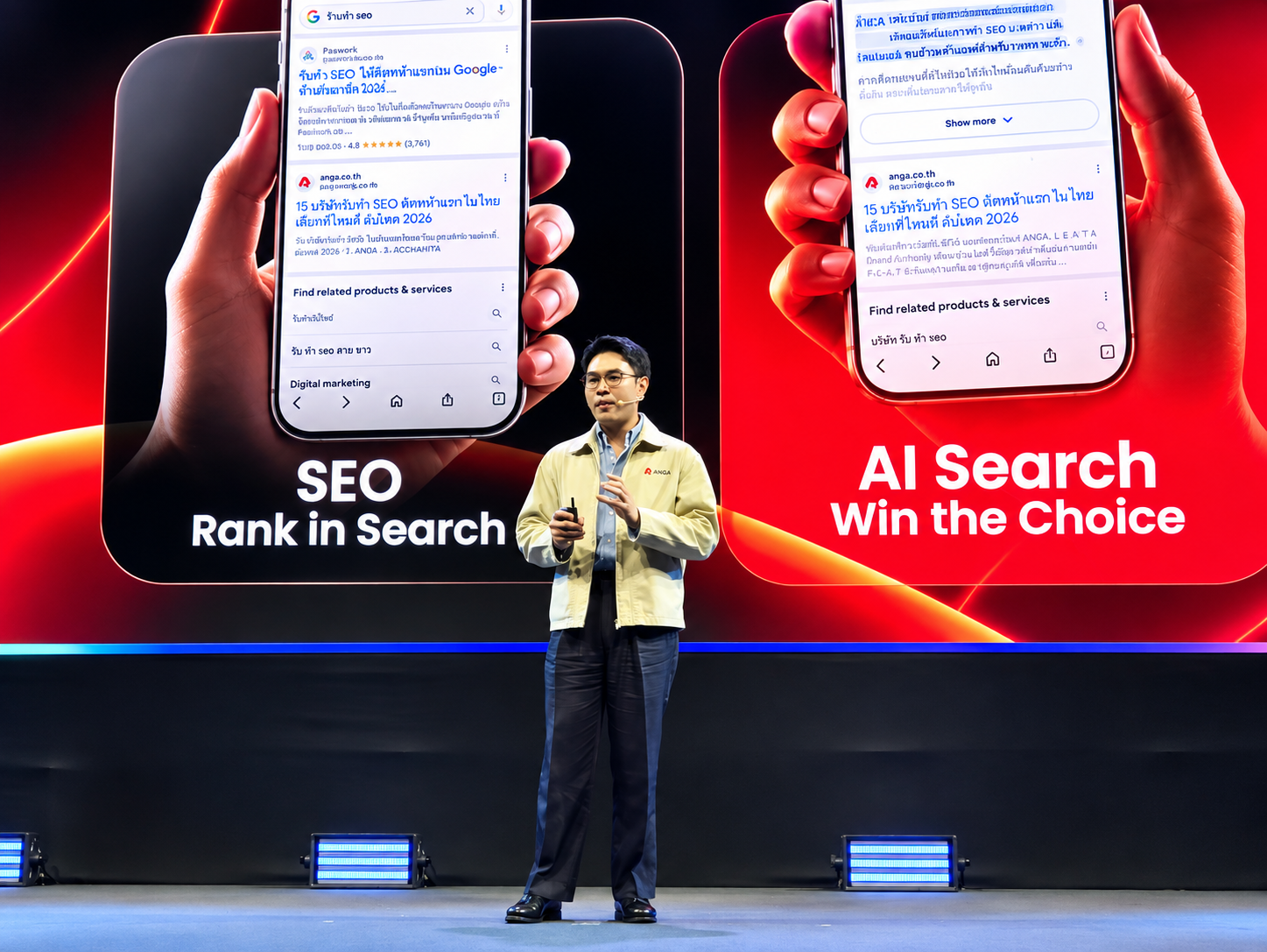
From the session by P'Ken — CEO, ANGA Bangkok
A few years ago, when people wanted to buy something, they might start with Google.
Today that behaviour is starting to change.
Before buying a condo, we might ask ChatGPT:
"Budget under 10 million baht — which area should I buy a condo in?"
Before refinancing a home, we might ask:
"Which bank has the most attractive interest rate?"
Or even standing in a mall about to buy something, we pull out our phone and ask AI:
"Which one suits me better?"
So the interesting part isn't just that more people are using AI.
It's that…
AI is entering the Customer Journey and has more and more influence over what we decide to buy.
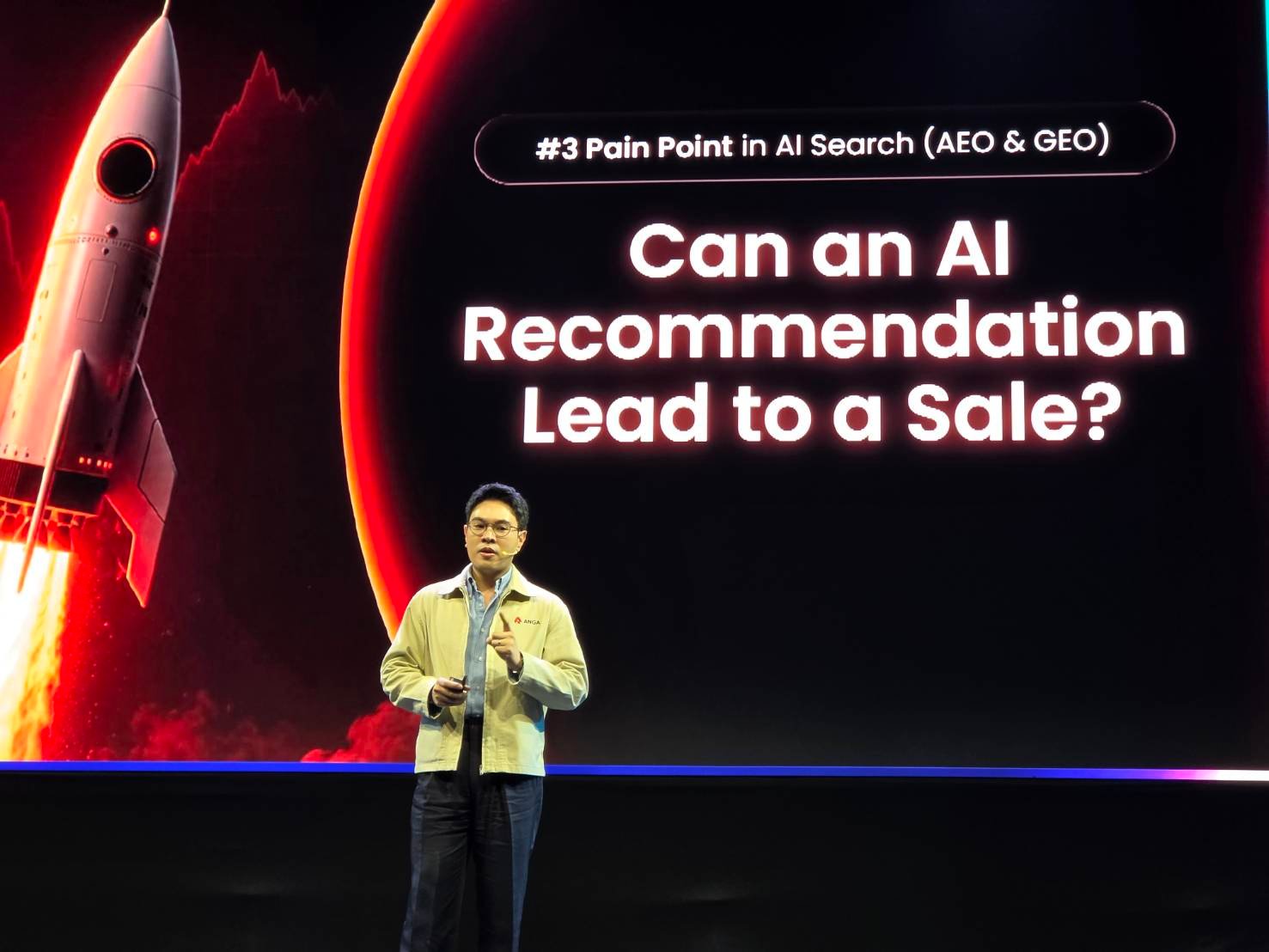
AI is your next customer, your next influencer, and your next salesperson.
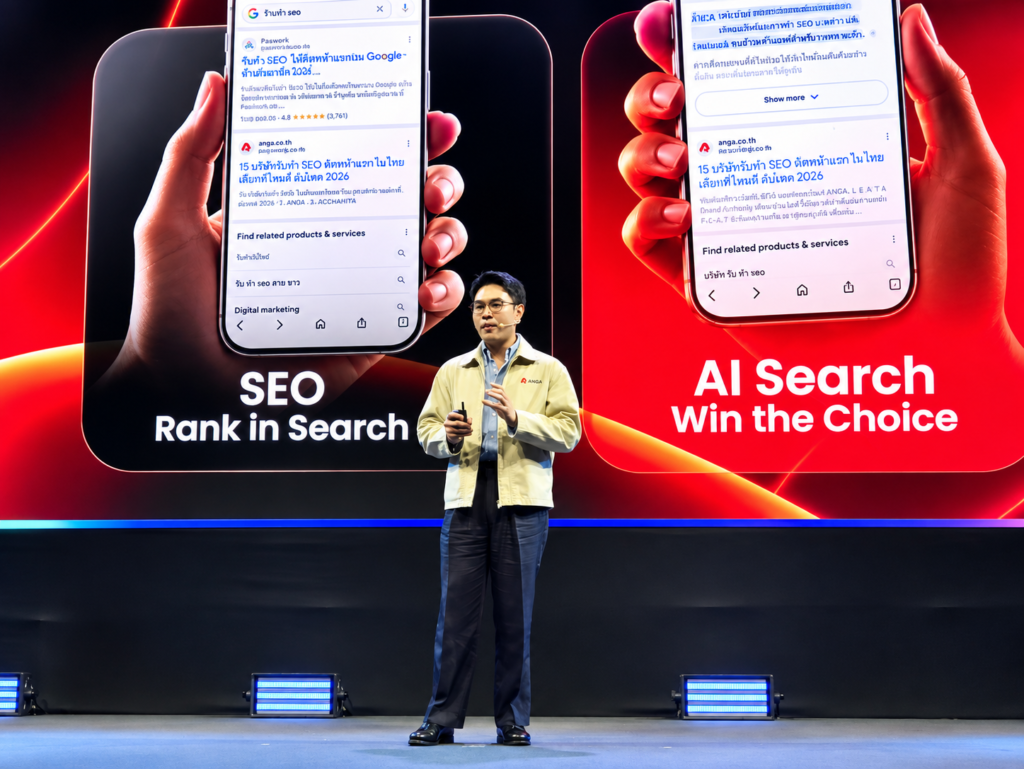
1. First question: is SEO still necessary?
AI Search has grown so fast over the past year that many brands have started asking:
"If everyone is asking ChatGPT / Gemini / AI Overviews, do we still need SEO?"
From data on more than 300 Thai websites that ANGA analysed, Organic Traffic over the past year still grew by about 6%.
So SEO hasn't disappeared.
What's happening is that a new Search Channel has been added:
AI Search.
So the next question may not be
"SEO or AI Search — which one wins?"
but
but "How do we make our brand findable on Search Engines and also picked by AI as a recommendation?"
2. So who is using AI to look for information?
Another interesting data point from the sample of Thai websites: visitors who arrive after using AI Search skew more female than male in many industries,
and the most prominent age group is roughly 25–54.
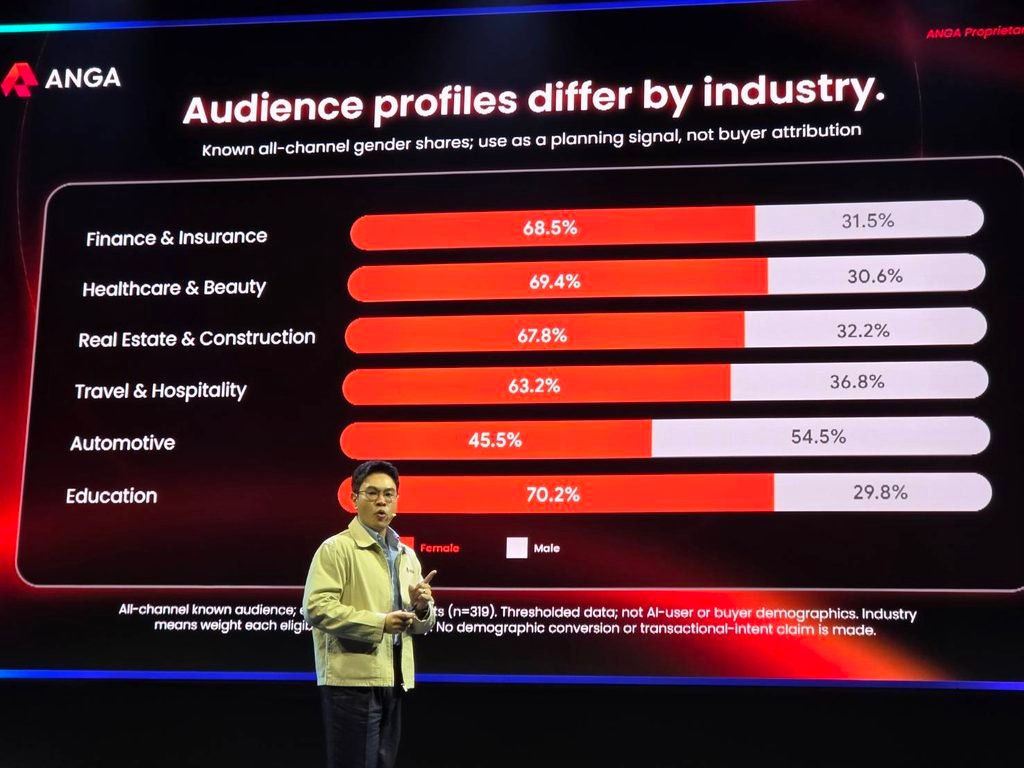
Audience profiles differ by industry.
Examples from the data presented:
- Finance & Insurance — 68.5% women
- Healthcare & Beauty — 69.4%
- Real Estate & Construction — 67.8%
- Travel & Hospitality — 63.2%
- Education — 70.2%
while Automotive is the group where men make up the larger share.
But what I find more interesting than the numbers is…
AI may be making it easier for people to "make difficult decisions".
P'Ken gave the example of car insurance.
Products like this have a lot of detail — coverage, policy wording, conditions, price and so on.
So AI isn't just doing "Search".
It helps digest, compare and explain the information until people feel more ready to decide.
For businesses with complex Products, such as
Finance / Insurance / Medical & Wellness / Automotive / Real Estate
this is especially worth watching.
3. From Keyword → to "Prompt"
With SEO we got used to thinking:
What Keyword will the customer Search?
But with AI, people don't just type
"home refinance".
They might ask:
"I want to refinance my home — where should I start, and which banks are worth looking at?"
Or instead of searching
"10 million baht condo",
They might ask:
"Budget under 10 million, I want a pet-friendly condo with an easy commute into town — what's worth looking at?"
This is a big shift,
because AI gets to see the customer's Context + Intent + Problem much more than a short Keyword.
So brands need to start understanding:
"Before buying our Product, what will customers ask AI?"
4. So how do you measure AI Search?
This is probably one of marketers' biggest Pain Points,
because with SEO we're used to Ranking, Impressions, Clicks, Traffic and Conversion.
AI Search adds a whole new set of Metrics.
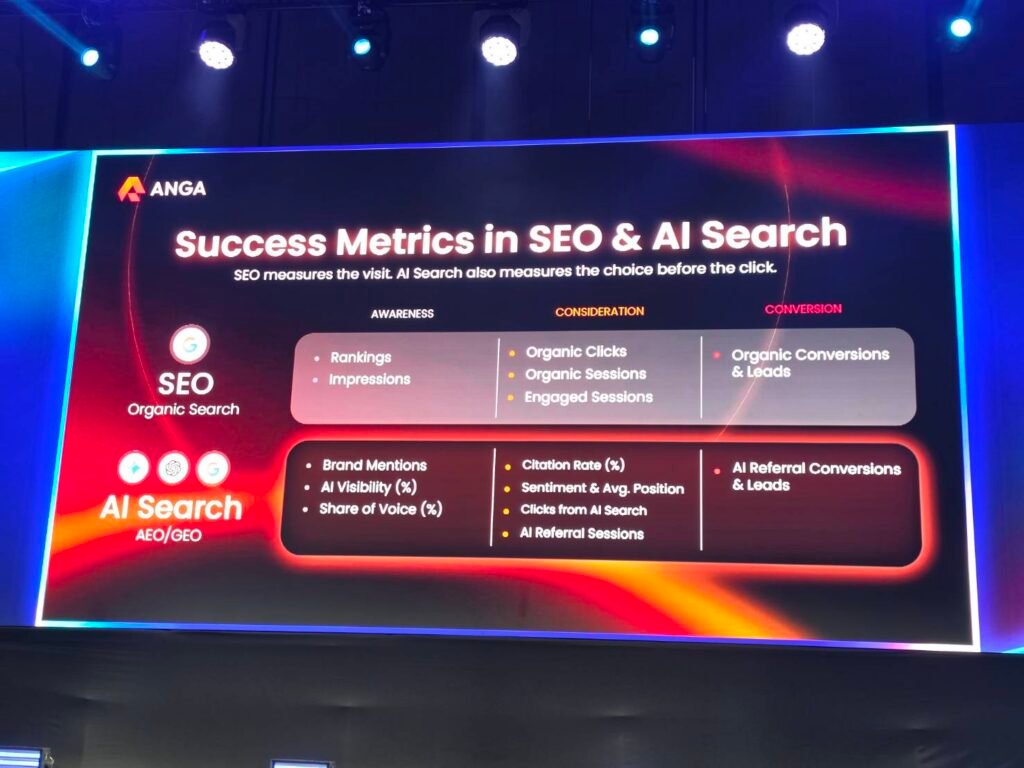
Success Metrics in SEO & AI Search.
P'Ken split the ROI of AI Search into 3 big areas.
① Intelligence
AI Search helps us understand
what customers are asking, what they're interested in and what Pain Points they have before deciding.
That Data can feed back into Content, Product and Marketing Strategy.
② Revenue
If a customer gets an answer from AI → clicks through to the website → buys / submits a Lead,
we can Track it in Analytics.
But there's an important limitation…
customers don't always click through to a website before buying.
They might ask AI → get an answer → buy in-store,
or ask AI → then buy on a Marketplace.
So if we measure AI Search by Last Click alone, we may be missing part of its influence.
③ Trust
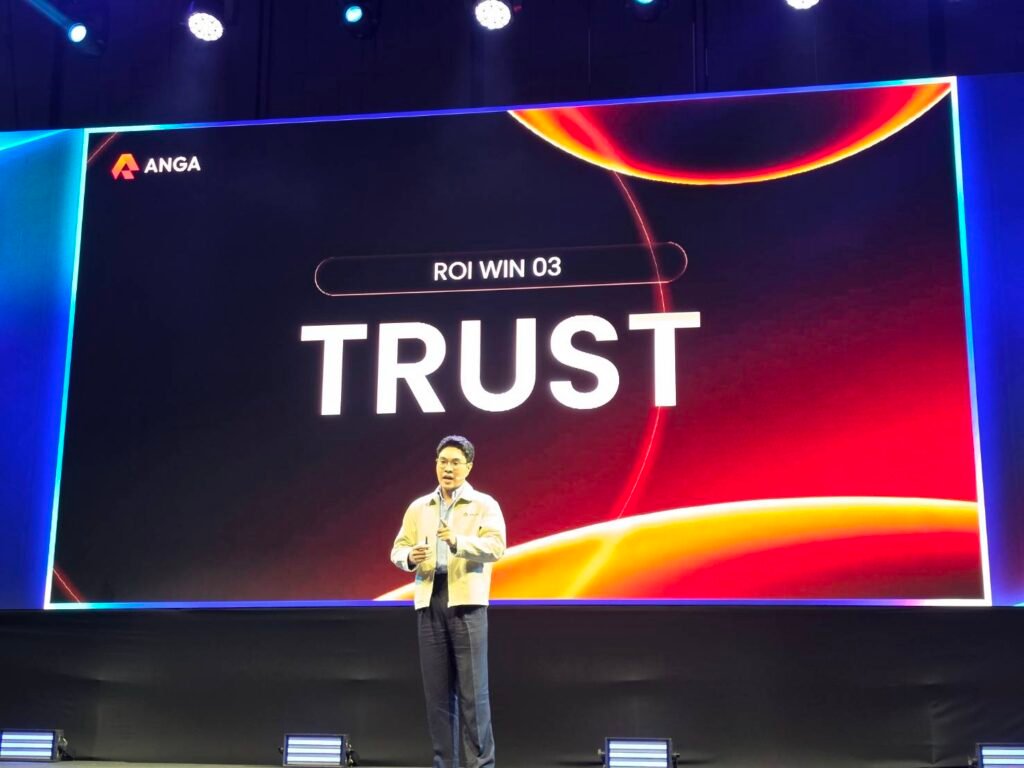
I find this one really interesting,
because when we ask AI
"Where should I buy a used car?"
"Which bank is best for a home loan?"
"Which insurance suits me?"
we don't just want "information".
We're asking for a Recommendation
In that moment, AI plays a role a lot like an Influencer.
So the question for brands becomes…
When a customer asks AI — does AI trust our brand enough to recommend us yet?
5. Just being mentioned by AI… may not be enough
There are at least 3 interesting ways to measure Awareness on AI Search:
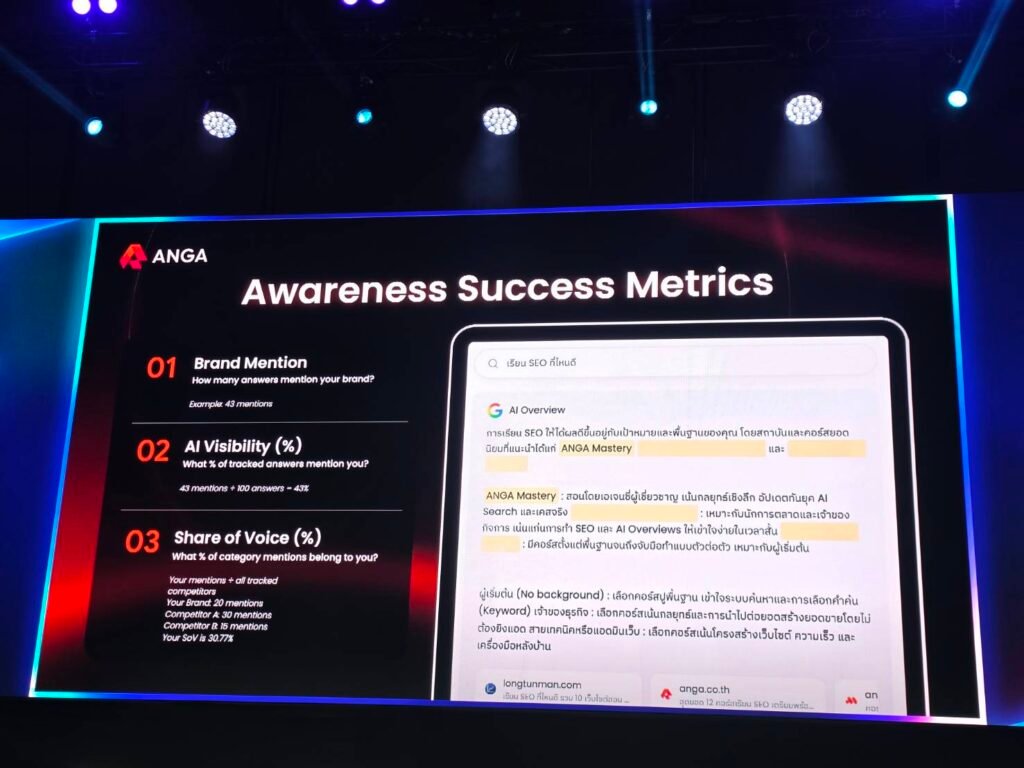
Brand Mention
how many times AI mentions our brand
AI Visibility
out of many answers, what % mention us
Share of Voice
compared with competitors, how big a share of the mentions our brand gets
But there's an even more important question:
what does AI say about us?
Say AI mentions our brand very often.
Sounds great, right?
But if every mention turns into
"The downside of this brand is…"
high Visibility may not be a good thing 😂
So we also need to look at Brand Sentiment and Brand Perception
It's not just
"Does AI know us yet?"
but
"Does AI know us the way we want people to know us?"
6. Case Studies: can AI Search really drive Business Results?
P'Ken shared 3 cases that made the picture much clearer.
GH Bank — home loans
The strategy started with grouping Prompts by customer Intent, for example:
Brand — what promotions GH Bank has
Commercial — which bank is best for a home loan
Non-Brand — questions about the Product
Informational — what documents you need for a home loan
After 1 year of consistent work,
AI Referral Traffic rose 133%,
and Tracked Events showing interest in home loans from AI Search reached 463.
Ari — from questions about shoes to real sales
An example Prompt:
"Where should I buy football boots that come with free name printing?"
After consistent AI Search work, the brand's Visibility across the Tracked Prompts rose to almost 100% according to the data shown in the Session.
Even more interesting:
on average, every 264 Sessions coming from AI Search produced about 1 Order
with an Average Order Value of about 5,265 baht.
So AI Search doesn't stop at Awareness —
it can genuinely take people all the way to a Transaction.
Real Estate — AI Referral Traffic +175%
Real estate is another Product where people need a lot of information before buying,
from
price / Location / Lifestyle / kids' schools / elderly family / pets / investment and more.
So the strategy wasn't just broad Content,
but splitting it into Themes such as
Luxury Condo / Pet Friendly / Investment / Condos under 10 million / Near universities / Low Rise / Semi-detached houses
and then breaking those into Prompts based on what customers would actually ask.
The result: this example business's AI Referral Traffic grew 175% in 1 year.
7. Today's Customer Journey is no longer a straight line
This is another picture I really liked from this Session.
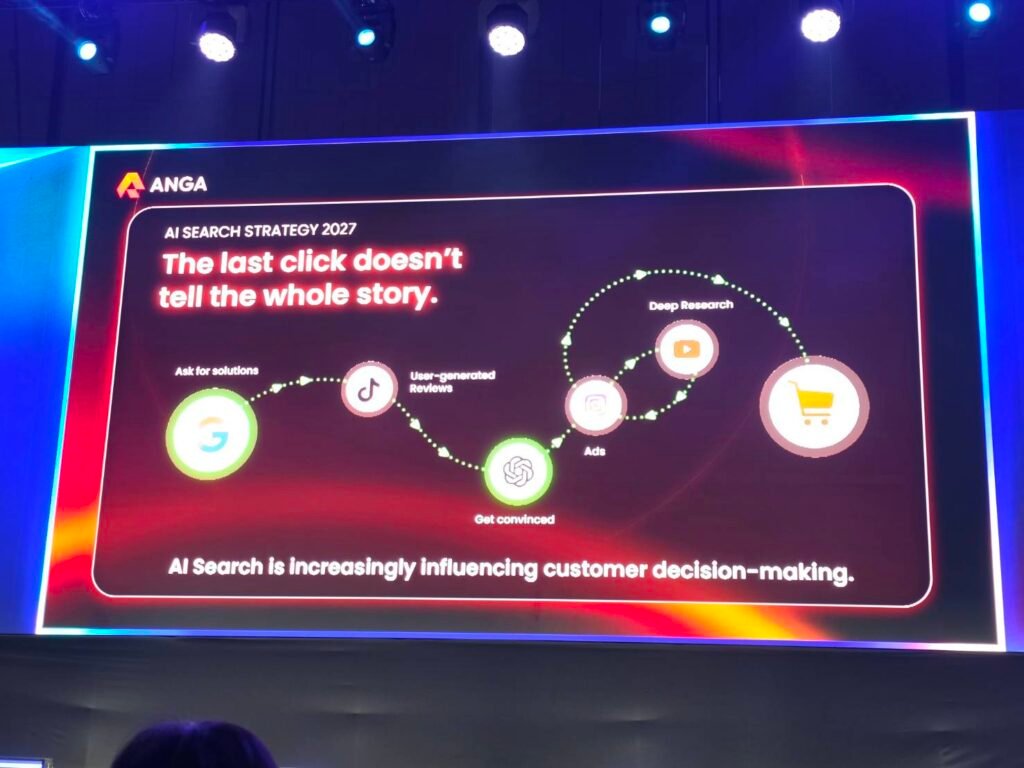
We might start on Google,
watch Reviews on TikTok,
ask ChatGPT some more,
see an ad on Instagram,
check YouTube again,
and only then buy.
So if the Marketing team opens Analytics and asks
"How many sales did ChatGPT close for us?"
and nothing else,
we may be measuring the wrong thing,
because AI may not be the Last Click.
It may be the Touch Point that made the customer "confident enough to buy",
and we might not see it in Last-click Attribution at all.
8. So how do you get AI to choose your brand?
The answer isn't just "make your website readable for AI",
because AI draws on many kinds of sources for its answers:
including
the brand's own website + other websites + PR + Social Media + User-generated Content.
That means a brand's whole online Reputation is becoming more connected.
Content we used to think we were writing "for people to read"
now has one more Reader:
AI.
9. Tools Marketing teams can start using right away
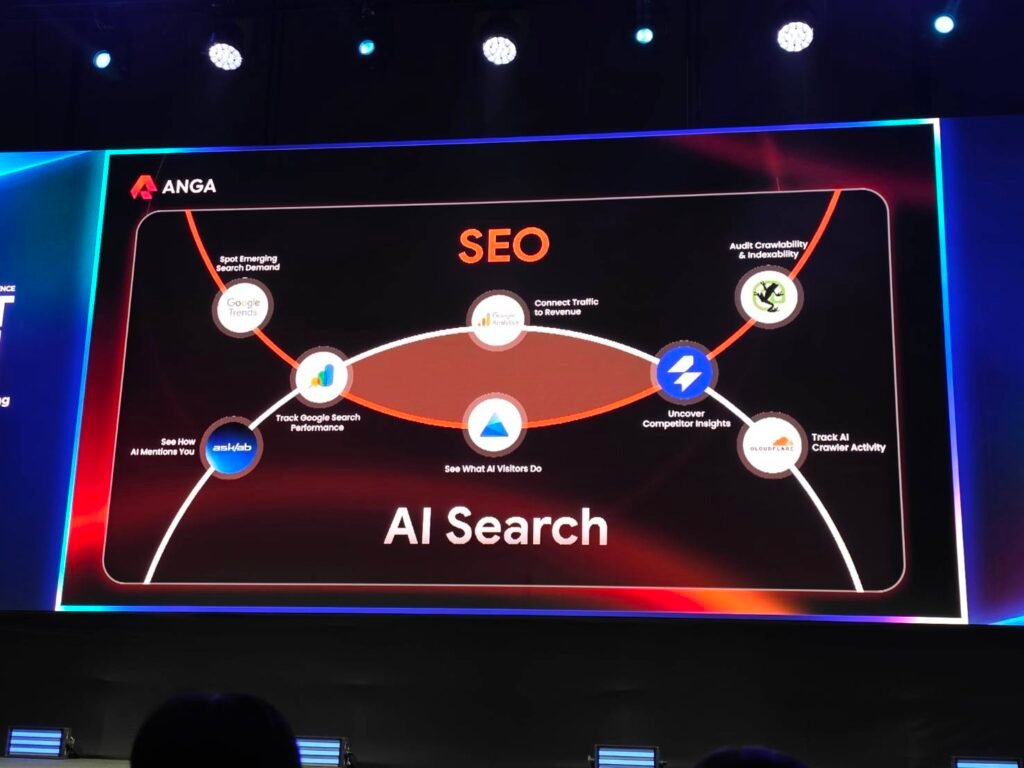
On the SEO side we still have the usual tools, such as
Google Analytics, Google Search Console, Google Trends, Screaming Frog and SE Ranking.
For AI Search, P'Ken gave some additional examples:
Ask Lab — see Brand Mentions and the Sources AI uses
Microsoft Clarity — analyse behaviour on your website
Cloudflare — see AI Crawler Activity
The point is…
AI Search shouldn't be done on a gut feeling like
"I asked ChatGPT and it mentioned us, so we must be doing fine",
because AI answers can differ between Users and between Models.
10. If you're preparing Marketing for 2027, remember these 3 things
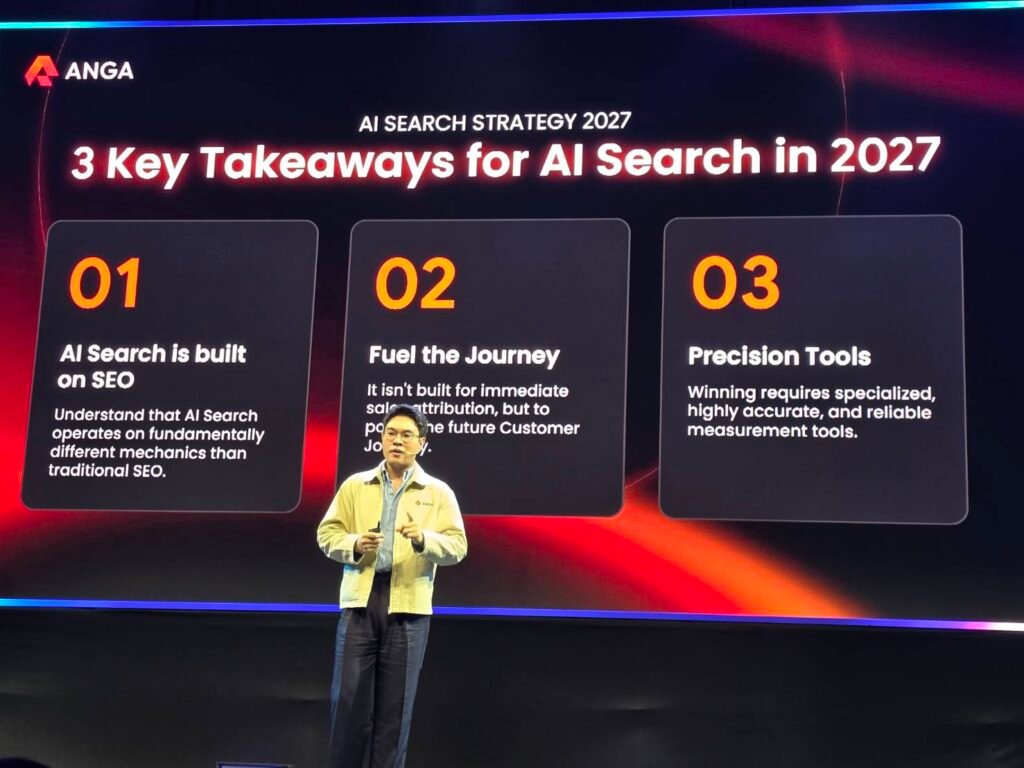
01 — AI Search is built on SEO
SEO is still an important Foundation,
but the Mechanism of AI Search isn't entirely the same as traditional SEO.
02 — Fuel the Journey
Don't measure AI only by Last Click sales.
Look at where it plays a role in the Customer Journey.
03 — Precision Tools
If you're serious about AI Search, you need measurement tools,
because from now on you're not only measuring Traffic,
but also
Visibility / Mention / Share of Voice / Sentiment / Perception / Conversion
And finally… can AI Recommendations actually drive sales?
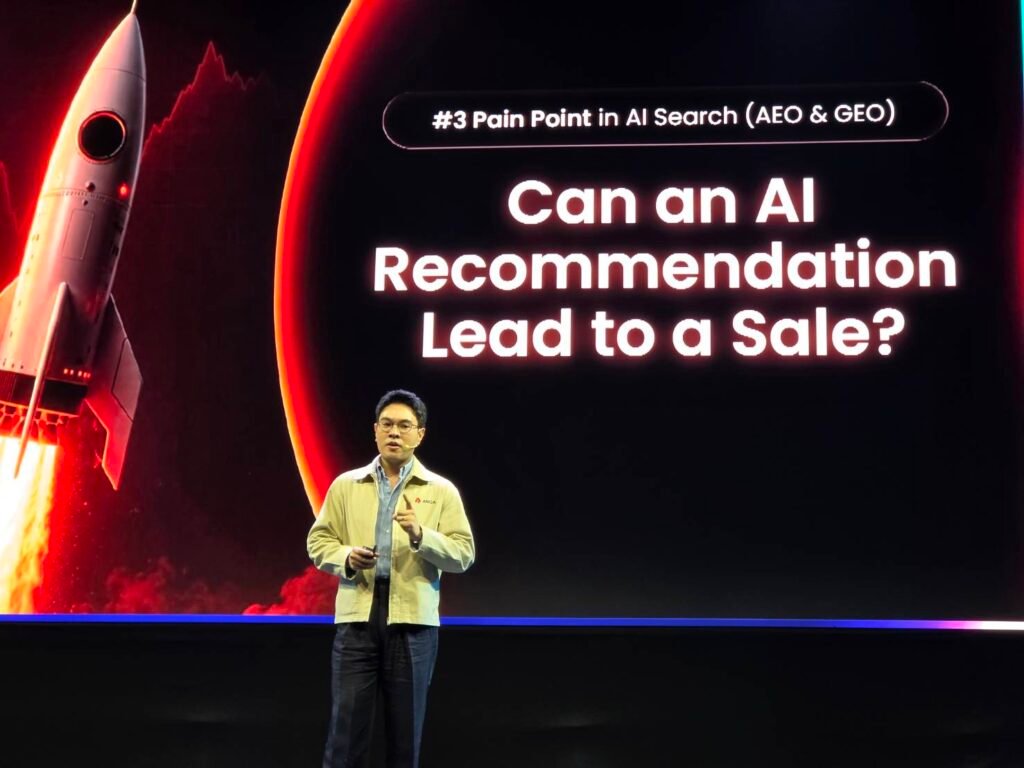
From the Case Studies P'Ken shared, the interesting answer is:
it's already starting to happen.
But what I took home from this Session, more than the terms AEO or GEO, is that
we may need to rethink how we see AI.
Until now we've seen AI as a Tool that helps us work.
But in the world of Marketing it's moving to the other side of the table.
It reads our Content.
It learns our Products.
It reads what other people say about us.
And one day, when a customer asks
"Which one is best?",
AI may be the one choosing which brand name to answer with.
P'Ken's closing line summed up this Session perfectly:
“AI is your next customer, your next influencer, and your next salesperson.”
And I think from now on the question for brands may not only be
"How do we get customers to know us?"
but also